Seeing the Unseen: Why Infrared Photography
I shoot infrared with a converted camera that picks up light our eyes can’t normally see. It’s light that’s always there, but we just don’t notice it. The sensor shows how the world looks in that wavelength, and the results can feel like stepping into a parallel version of reality.
See a full gallery of infrared images
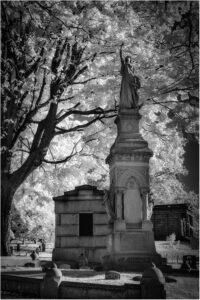
Look at the shot of the pine forest. The trees stand dark and solid, but the smaller growth on the ground glows white, almost like it’s lit from within. To the eye, those little pines are just green, blending into everything else. In infrared they separate out, giving the whole scene a dreamlike layer that wasn’t visible before.
Or the covered bridges. Wood and stone hold their texture and detail, but the leaves all around them turn bright and luminous. It flips the balance: what should be background becomes the lightest, most eye-catching part of the frame. Ordinary foliage takes on the role of atmosphere, almost like it’s surrounding the structure with a soft halo.

The effect is even stranger with architecture. In the photograph of the abandoned mansion, the grass and trees look frosted, glowing against a dark sky. The building sits in the middle almost unchanged, but the contrast makes it feel like it’s sitting in another dimension. It’s the same with the footbridge in the woods—infrared turns the ferns and leaves into glowing silver, while the path and bridge remain grounded and familiar. That push and pull between the normal and the transformed is what makes infrared addictive to me.
Even a simple subject like a flower becomes uncanny. The dandelion shows textures and details that don’t really stand out in visible light. The petals catch the infrared and glow, while the background drops into black, giving it a sharp, isolated presence.
That’s what infrared keeps reminding me of: there’s always more happening than I can see at first glance. A scene that looks flat or ordinary can suddenly come alive. Sometimes it’s eerie, sometimes it’s comforting, but it always feels like pulling back a curtain on something hidden in plain sight.
